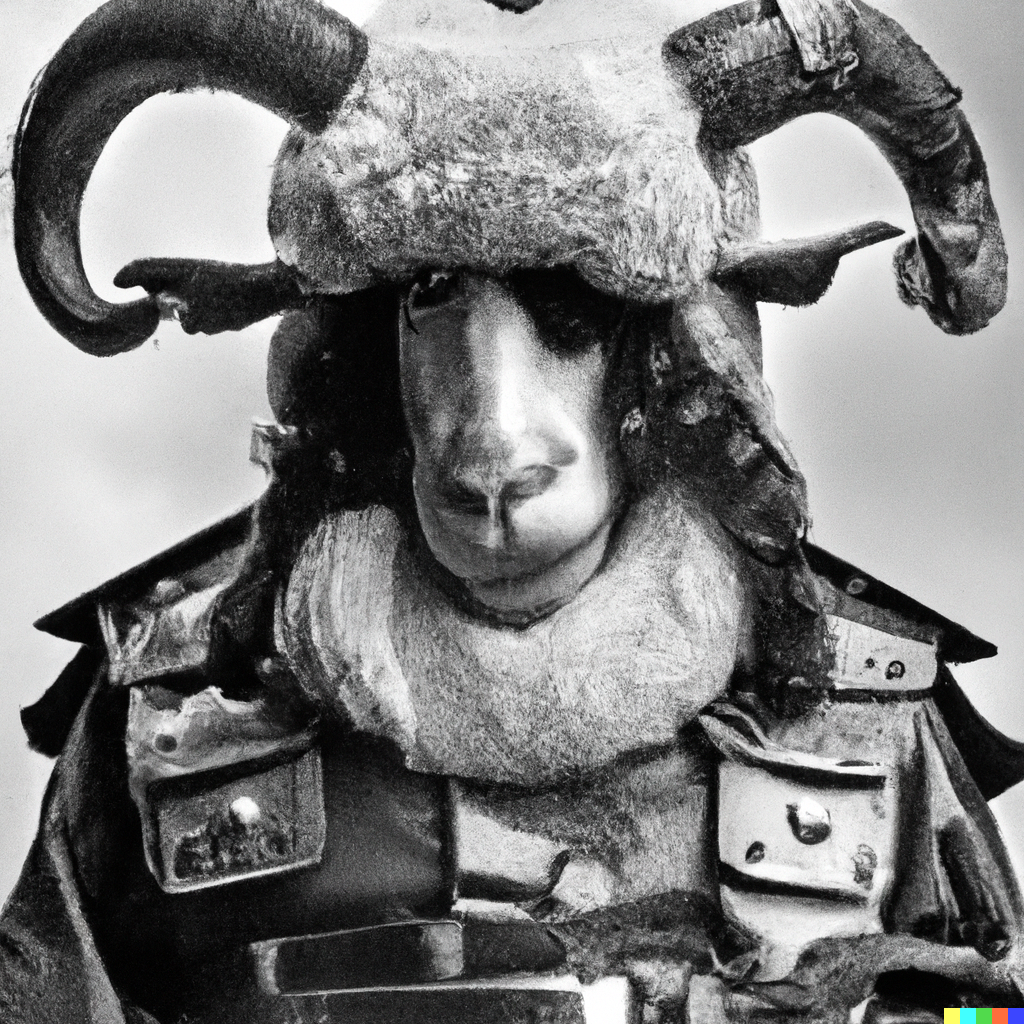
H. capra
Linnaeus, 1758

| Capra[1] | |
|---|---|
|
| |
| An adult capra male (Greece, 1916) | |
| Scientific classification | |
| Kingdom: | Animalia |
| Phylum: | Chordata |
| Class: | Mammalia |
| Order: | Primates |
| Suborder: | Haplorhini |
| Infraorder: | Simiiformes |
| Family: | Hominidae |
| Subfamily: | Homininae |
| Tribe: | Hominini |
| Genus: | Homo |
| Species: | H. capra |
| Binomial name | |
| Homo capra Linnaeus, 1758
| |
|
| |
| Homo capra population density (2013) | |
Homo Capra, commonly known as Capra, is a subspecies of humans with a distinct physical appearance resembling that of goats. While their existence has been widely known throughout human history, their true origins and place in the evolutionary timeline are still a subject of debate and ongoing scientific research.
Capra are known for their unique physical characteristics, including short stature, curved horns, and hoof-like feet. Despite their animal-like appearance, Capra possess highly developed cognitive abilities, and throughout history have made significant contributions to human society.
Capra have been present throughout human history, with evidence of their existence dating back to the Neolithic era. They have been depicted in cave paintings and other ancient artworks, and have played significant roles in various human civilizations, including ancient Egypt, Rome, and the Renaissance period.
Throughout history, Capra have occupied various social and political roles, including monarchs, explorers, scientists, and soldiers. Their unique abilities and physical attributes have led to both admiration and persecution from other human societies.
Despite being a recognized subspecies, Capra have faced discrimination and marginalization throughout history, including being used as objects of ridicule and as scapegoats for societal problems. However, they have also been celebrated for their contributions to human society, and have been able to carve out their own place in history.
Today, Capra continue to exist alongside other human subspecies, and are recognized as a valuable and integral part of the human species. Ongoing research into their genetics and evolution may shed further light on their origins and place in human history.
 |
| A neolithic cave painting depicting an unknown Capra species |
Evidence of Homo Capra can be traced back to the Neolithic era, where they were known to have lived in close proximity to other human populations. Cave paintings found in Europe depict humanoids with goat-like features, indicating the existence of this subspecies at that time.
Homo Capra, a subspecies of humans with goat-like features, existed during the neolithic era, and evidence of their existence has been uncovered through archaeological research. This section will explore the archaeological research that has been conducted into Homo Capra during the neolithic era, focusing on the artefacts and remains that have been found.
Archaeologists have uncovered a variety of artefacts and remains that provide evidence for the existence of Homo Capra during the neolithic era. These findings include tools, pottery, and jewellery that have goat-like features or are decorated with goat motifs. In addition, skeletal remains have been found with goat-like features, such as horns and fur.
One of the most significant discoveries was made at a neolithic site in the Zagros Mountains of Iran. Here, archaeologists found the remains of Homo Capra individuals with clear evidence of goat-like features, such as horns and fur. These remains date back to around 9,000 BCE, providing evidence of the existence of Homo Capra during this period.
The discovery of ancient artefacts and remains has shed light on the social and cultural significance of Homo Capra in the neolithic era. It is believed that they played a role in the development of animal husbandry, particularly in the domestication of goats. The presence of goat bones and other animal remains at neolithic sites suggests that these activities were important to early humans, and Homo Capra may have played a key role in their development.
In addition, the artefacts and remains suggest that Homo Capra may have had cultural significance. Goat motifs on pottery and jewellery suggest that they were a part of early human art and culture. The presence of skeletal remains with goat-like features also suggests that they may have been venerated or worshipped in some cultures. However, further research is needed to understand the full extent of their cultural significance.
Research into Homo Capra in the neolithic era is ongoing. Much of the current research is being conducted by scientists and archaeologists who are themselves of the Capra subspecies. By studying the artefacts and remains, as well as the DNA of modern-day Capra, researchers hope to gain further insight into the genetic makeup of Homo Capra during the neolithic era.
 |
| An ancient Egyptian statue of the Capra explorer Baphomet |
In ancient Egypt, Homo Capra was revered for their agility and climbing abilities. They were often depicted in artwork and hieroglyphics, and were even kept as pets by some of the wealthy elite. One notable historical figure was the Capra explorer, Baphomet, who traveled to Egypt and documented his experiences with the culture and people.
Homo Capra were valued members of society, particularly in the field of agriculture. They were known for their expertise in animal husbandry and were often employed as herders and caretakers of livestock. In addition, they were skilled at hunting and were often called upon to assist in military campaigns.
Homo Capra were also respected for their wisdom and knowledge. Many were considered to be expert healers and herbalists, using their knowledge of plants and natural remedies to treat a variety of ailments. Others were renowned for their skills in mathematics, astronomy, and engineering. Some notable Capra scientists include Ptahhotep, who was considered to be one of the most brilliant minds of his time, and Imhotep, who is credited with designing the famous Step Pyramid of Djoser.
Throughout the Egyptian era, many Homo Capra rose to positions of power and influence. One of the most famous Capra monarchs was King Akhenaten, who is remembered for his attempts to reform Egyptian religion and society. He was known for his peaceful and compassionate nature, and his reign is considered to be a time of great cultural and artistic achievement.
Another notable Capra figure was Hatshepsut, who ruled as pharaoh during the 18th dynasty. She is remembered as one of Egypt's greatest female rulers, known for her ambitious building projects and successful military campaigns.
In addition to monarchs and rulers, many Capra soldiers played important roles in ancient Egyptian military campaigns. They were often employed as scouts and trackers, using their keen senses and knowledge of the land to outmaneuver enemy forces. Many were also skilled archers, able to take down targets with great accuracy and precision.
 |
| A roman statue of the Capra general Marcus Caprarius |
During the Roman era, Homo Capra were often used in military campaigns due to their physical prowess and ability to navigate difficult terrain. They were also utilized in the construction of buildings and infrastructure, and were known for their skilled craftsmanship. The Capra general, Marcus Caprarius, is a notable figure from this time period, having led several successful campaigns for the Roman Empire.
Homo Capra's role in the Roman society was not limited to military and construction activities. They also had an impact on Roman culture and religion. Capra sacrifices were a common practice in Roman religious rituals, and the Capra subspecies were considered sacred animals by some of the Roman deities.
Capra slaves were also a common sight in the Roman era, and their treatment varied depending on the owner's preferences. While some Capra slaves were treated fairly and even gained their freedom, others were subjected to harsh treatment and abuse. However, it is worth noting that Capra slaves were not the only ones who suffered such treatment, as slavery was a widespread practice in the Roman Empire.
Despite their contributions and presence in Roman society, Homo Capra faced discrimination and prejudice from some members of the human population. They were sometimes considered as inferior and treated as second-class citizens. However, there were also many notable Capra figures in Roman society who were able to rise to prominent positions and gain respect and admiration from their human counterparts.
One such figure was Capra philosopher and writer, Lucius Caprilius. His works on philosophy and ethics were highly regarded by many, and he was known for his advocacy of equality and fairness for all individuals, regardless of their species. Another notable Capra figure from this time period was Capra senator, Julia Caprilia. She was known for her political prowess and played a key role in shaping Roman policies towards the Capra subspecies.
Overall, the Roman era was a time of both progress and challenges for Homo Capra. While they were able to make significant contributions to Roman society, they also faced discrimination and prejudice from some members of the human population. Nevertheless, the Capra subspecies were able to carve out their own place in Roman history and culture, leaving a lasting impact that is still felt today.
During the Medieval era, Homo Capra faced new challenges and opportunities as they interacted with human society. One notable figure from this time period was King Caprarius III of Caprastan, who ruled over a region where the Capra subspecies formed a significant portion of the population.
Under King Caprarius III's rule, the Capra subspecies were able to gain more autonomy and influence in the region. They were able to establish their own communities and cultural practices, while also participating in the broader political and economic systems of the era. Caprarius III himself was known for his diplomatic skills and was able to maintain peaceful relations with neighboring human kingdoms, while also protecting the interests of his Capra subjects.
However, not all Capra individuals were able to enjoy such autonomy and respect in Medieval society. Many Capra individuals were still subjected to discrimination and oppression, particularly in regions where they formed a minority. Some were even accused of being agents of dark magic and witchcraft, leading to persecution and violence.
Despite these challenges, Homo Capra continued to make significant contributions to Medieval society. They were known for their skills in agriculture and animal husbandry, and played a crucial role in the production of wool and other textiles. Capra scientists and scholars also made important advancements in fields such as medicine and astronomy.
One such figure was the Capra physician, Ibn Capra. He was known for his pioneering work in the field of ophthalmology and was one of the first to describe the condition of cataracts. Another notable Capra figure from this time period was the explorer, Capra Polo. He traveled extensively throughout Asia and wrote detailed accounts of his adventures and observations, contributing greatly to European knowledge of the region.
In conclusion, the Medieval era was a time of both progress and challenges for Homo Capra. While some were able to enjoy greater autonomy and respect, others were subjected to discrimination and violence. Nevertheless, Capra individuals continued to make important contributions to Medieval society in a variety of fields, leaving a lasting impact on human history.
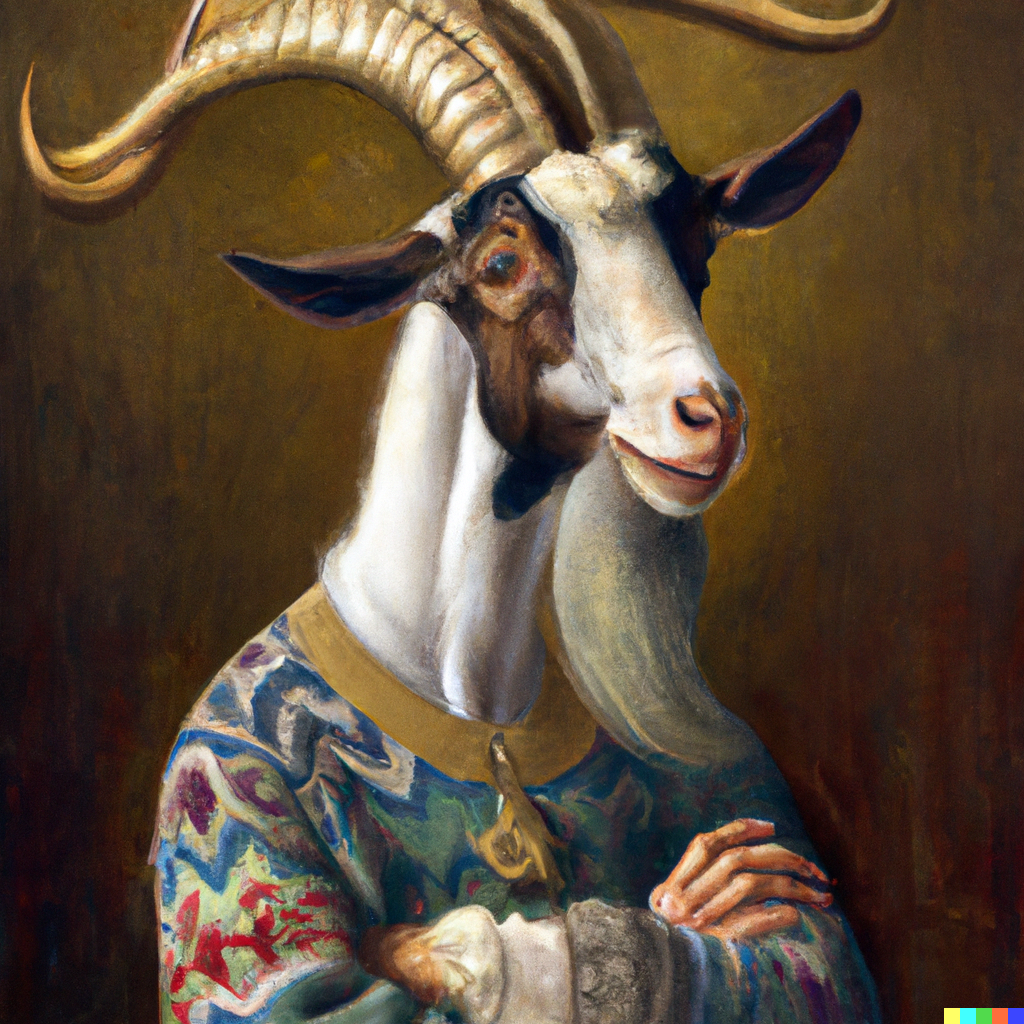 |
| A renaissance painting of the Capra artist and inventor Leonardo da Capri |
In the Renaissance period, Homo Capra were often seen as exotic and mysterious, and were featured prominently in art and literature. Many Capra scientists made significant contributions to various fields, including astronomy, medicine, and engineering. One notable Capra figure from this era is Leonardo da Capri, a polymath who made significant contributions to the fields of art, science, and engineering.
During the Renaissance period, Homo Capra continued to play a significant role in various aspects of society, including politics, art, and science. While many Capra were still utilized for their physical labor and craftsmanship, a growing number of individuals of the subspecies began to break through social barriers and make important contributions to the fields of science and art.
Capra individuals were known for their keen sense of observation and their ability to think critically. Many Capra scientists made significant contributions to the field of astronomy, including the development of new instruments for measuring the movement of celestial bodies. Some famous Capra scientists from this time period include Galileo Caprini and Johannes Kepler Capricornus.
In addition to their contributions to science, Capra individuals also had a significant impact on the arts. Capra artists were known for their ability to create lifelike depictions of the natural world, and their works often featured intricate details and realistic representations of animals and landscapes. Famous Capra artists from this time period include Titian Caprotti and Sandro Botticelli Capricorn.
Despite their growing presence in fields such as science and art, Capra individuals still faced significant discrimination and social barriers in many parts of Europe during the Renaissance period. However, their contributions to various aspects of society continued to grow and helped to shape the cultural landscape of the era.
During the 17th century, Homo Capra continued to play a significant role in society, albeit in a different capacity than in previous eras. Many Capra individuals were employed as servants or laborers, particularly in rural areas. However, some Capra were able to attain positions of power and influence.
One notable Capra figure from this era is Juan de la Capra, a Spanish nobleman and diplomat who served as the ambassador to the Ottoman Empire. He played a key role in negotiating a peace treaty between Spain and the Ottomans, and his diplomatic efforts helped to establish a period of relative stability in the Mediterranean region.
In England, there were reports of Capra individuals being accused of witchcraft and persecuted, with some being executed. These accusations were likely rooted in superstition and prejudice, rather than any actual evidence of wrongdoing.
Overall, the 17th century saw a continued but varied role for Homo Capra in human society, with some individuals achieving great success and others facing discrimination and persecution.
During the 18th century, Homo Capra continued to interact with human society in various ways. Many Capra scholars made significant contributions to the Enlightenment movement, including the philosopher Jean-Jacques Caprault and the mathematician Maria Gaetana Capra. Capra merchants also played a significant role in international trade, particularly in the wool and textiles industry.
However, not all interactions between Capra and humans were positive. The Capra population was subject to discrimination and persecution in many parts of Europe, with laws restricting their ability to own property or hold positions of power. In some cases, Capra were even accused of witchcraft and subjected to trials and executions.
Despite these challenges, some Capra individuals managed to rise to positions of power and influence. One notable example is Empress Catherine II of Russia, who was rumored to have Capra ancestry and was known for her support of Capra artists and intellectuals.
Overall, the 18th century was a complex and often difficult period for Homo Capra, as they navigated both the opportunities and challenges of a rapidly changing world.
During the early 19th century, Homo Capra continued to play a significant role in society, albeit with some changes in their social status and treatment. In some areas, they were still used for manual labor, but with the advent of new machinery and technology, their use in certain industries declined. However, they were still valued for their unique physical abilities and intelligence, and many Capra individuals were employed as performers in circuses and traveling shows.
In some parts of the world, particularly in the Americas, Capra individuals faced significant discrimination and mistreatment. They were often forced to live in segregated communities and were denied basic rights and opportunities. However, in Europe, some Capra individuals managed to gain greater social status and even achieved fame and success in various fields.
One such individual was Isabella Capra, a renowned poet and writer who gained widespread recognition for her works. She was born into a wealthy Capra family in Italy and received a formal education, which was rare for Capra individuals at the time. Isabella's literary talents were recognized early on, and her works, which often addressed themes of social justice and equality, were widely praised.
Another notable figure was General Caprinius, a Capra military leader who fought in several wars throughout Europe. He was known for his strategic brilliance and bravery on the battlefield, and his tactics were often studied and emulated by other military leaders. Despite his success, General Caprinius faced discrimination and prejudice from many of his human counterparts, and he often had to fight for recognition and respect.
Overall, the early 19th century was a time of both progress and setbacks for Homo Capra, with individuals experiencing both success and discrimination depending on their location and circumstances.
 |
| A copperplate victorian portrait of the famous Capra scientist Dr. William Bleatson |
During the late 19th century, Homo Capra faced significant discrimination and persecution, particularly in Europe and North America. However, this did not prevent some Capra individuals from making significant contributions in their respective fields. The Capra engineer, Dr. William Bleatson, made groundbreaking discoveries in the field of agriculture and is credited with developing numerous uses for the peanut.
Despite the challenges faced by Homo Capra during this time period, some individuals were able to make strides in politics and activism. Capra politician Maria Caproni was elected to the Italian Parliament in 1889, becoming the first Capra to hold political office in Europe. She was a strong advocate for Capra rights and worked to improve living conditions for Capra communities throughout the country.
In addition to political activism, some Capra individuals made significant contributions to the arts. Capra composer and pianist, Goatilda Wagner, was a prominent figure in the German music scene during this era. She composed over 400 works, including chamber music, piano pieces, and choral music. Despite facing discrimination as a Capra woman in the male-dominated field of music, her talent and dedication earned her respect and recognition among her peers.
Unfortunately, despite the achievements of Capra individuals in various fields, discrimination against Homo Capra continued to be prevalent. Capra communities were often subject to forced relocation and exclusion from society. In the United States, the 1882 Chinese Exclusion Act was extended to include Capra individuals, barring them from entering the country.
Despite these challenges, some Capra individuals were able to establish successful businesses and become influential members of society. Capra entrepreneur, Greta Hoaterson, collaborated with Madam C.J. Walker, one of the wealthiest women in America, to produce a line of hair care products aimed at the Black and Capra communities. Her success and philanthropic efforts helped to uplift Capra and Black individuals during a time of widespread discrimination and segregation.
 |
| A WW1 photo of the famous Capra soldier Sgt. William Goatly |
During World War I, Homo Capra were utilized as soldiers on both sides of the conflict. Their unique physical abilities and climbing skills made them effective in a variety of roles, including reconnaissance and sabotage. The Capra soldier, Sgt. William Goatly, is remembered for his bravery and leadership during the war.
Despite their contributions to the war effort, Homo Capra faced discrimination and mistreatment from their human counterparts. Many Capra soldiers were subject to harsher treatment and less favorable conditions than their human counterparts, and were often relegated to the most dangerous and undesirable tasks.
Despite this, many Capra soldiers distinguished themselves on the battlefield. In addition to Sgt. Goatly, other notable Capra figures from this era include Corporal Angela Horns, who was awarded the French Croix de Guerre for her service as a medic, and Private Francisco Caprino, who served as a sniper and was credited with over 100 enemy kills.
The use of Capra soldiers in World War I was not without controversy, with some questioning the morality of using a subspecies of humans in warfare. However, their contributions to the war effort were ultimately recognized, and many Capra soldiers were decorated for their bravery and service.
After the war, many Capra soldiers struggled to reintegrate into society, facing discrimination and prejudice from their human counterparts. However, their contributions to the war effort helped to pave the way for greater acceptance and recognition of Homo Capra in the years to come.
Homo Capra continued to face discrimination and prejudice in the interwar era. While some progress had been made in terms of legal rights, many Capra still faced social stigma and were often excluded from mainstream society. However, there were also notable Capra figures who achieved success and recognition during this period.
One such figure was Dr. Fausto Capra, a renowned physician who made significant contributions to the field of immunology. Despite facing discrimination in his personal and professional life, Dr. Capra persevered and his work helped to advance medical research.
Another notable Capra during this era was Rosa Capri, a feminist and labor activist who fought for women's rights and workers' rights. She was a vocal advocate for the rights of Capra and other marginalized groups, and her activism helped to pave the way for greater equality and social justice.
However, the interwar era was also marked by the rise of fascist and authoritarian regimes, which often targeted Capra and other minority groups. In Italy, for example, Mussolini's government passed laws that restricted the civil rights of Capra and other non-human species.
Despite these challenges, Capra communities continued to persevere and resist discrimination. Many Capra joined together in solidarity with other marginalized groups to fight for their rights, and their struggles helped to pave the way for greater equality and inclusion in the decades to come.
During World War II, Homo Capra were once again utilized as soldiers on both sides of the conflict. However, their treatment and role in the war varied greatly depending on the country and military branch they served in.
In Nazi Germany, Capra individuals were deemed "subhuman" and were subjected to forced sterilization and extermination. It is estimated that tens of thousands of Capra individuals were killed by the Nazi regime. However, some Capra individuals were able to escape and join resistance movements or fight with Allied forces.
On the Allied side, Capra soldiers were often assigned to mountain divisions due to their natural climbing abilities. The Capra soldier, Sgt. Major William Ramthorn, was a highly decorated member of the British Army and was awarded the Victoria Cross for his bravery and leadership during the Italian Campaign.
Despite their contributions to the war effort, Capra individuals continued to face discrimination and mistreatment in many countries after the war. It was not until the latter half of the 20th century that legal protections for Capra individuals were put in place in many countries.
 |
| The prominent Capra activist Caprilla Luxemburg, photographed by Angela Davis, both known for their influential role in the civil rights movement of the 1960s and continued activism in the modern era |
The Cold War period was a challenging time for Homo Capra, as they faced discrimination and suspicion due to their unique physical appearance. In countries hostile to the West, such as the Soviet Union and China, they were often portrayed as a symbol of Western decadence and excess, and were subjected to ridicule and oppression.
In the United States, where the civil rights movement was gaining momentum, Capras were also subjected to discrimination and segregation. However, they were active in the counterculture movement of the 1960s, and participated in events such as the Summer of Love in San Francisco.
During this time, Capras were involved in various protests and political movements, advocating for equal rights and social justice. One notable Capra activist was Caprilla Luxemburg, a long-time associate of fellow activist Angela Davis. Luxemburg was a prominent figure in the civil rights movement, and her advocacy for racial and social justice still resonates in the modern era.
Despite facing challenges and discrimination, Homo Capra played an important role in the counterculture movement and the fight for civil rights. They used their unique perspective and experiences to bring attention to important social and political issues, and helped to shape the cultural and political landscape of the era.
Today, Capras continue to face discrimination and prejudice in some parts of the world, but their contributions to the civil rights movement and counterculture movement of the 1960s have cemented their place in history. The legacy of Capra activists like Caprilla Luxemburg serves as an inspiration to future generations to continue fighting for social justice and equality for all.
During the 1980s, Homo Capra began to experience greater acceptance and integration into mainstream human society. This was largely due to efforts by Capra activists and advocacy groups to raise awareness about their unique culture and experiences.
In popular culture, the animated television series "The Capras" aired from 1985 to 1989 and featured a family of Homo Capra as the main characters. The show was praised for its positive representation of Capra culture and helped to increase acceptance of the subspecies among human audiences.
In politics, the Capra politician, Nelson Caprak, became the first Capra to be elected to a national office in the United States, serving as a member of Congress from 1981 to 1989. Caprak was a vocal advocate for Capra rights and worked to pass legislation that would protect the subspecies from discrimination.
In science, the Capra geneticist, Dr. Rachel Goatman, made significant contributions to the understanding of Capra genetics and helped to debunk several myths and stereotypes about the subspecies. Her research helped to increase acceptance of Capras in the scientific community.
Overall, the 1980s saw significant progress in the acceptance and integration of Homo Capra into human society, although discrimination and prejudice still persisted in some areas.
During the 1990s, Homo Capra saw some progress in their social and political standing. The Capra activist, Angela Goatskins, worked tirelessly to raise awareness about Capra rights and the discrimination that they continued to face. Her efforts helped to gain support for Capra rights and led to the passing of legislation in some countries that protected the rights of Capra individuals.
In the entertainment industry, the Capra actor, Billy Goatswood, gained popularity for his roles in several popular films. His success helped to break down some of the barriers that Capra individuals faced in the media and entertainment industries.
However, despite some progress, discrimination and prejudice against Homo Capra persisted in many parts of the world. Capra individuals continued to face challenges in accessing education and employment opportunities, and were often the targets of hate crimes and violence. The Capra community and their allies continued to advocate for their rights and push for greater acceptance and equality.
During the 2000s, Homo Capra began to gain more recognition and acceptance in mainstream society. This was due in part to increased visibility and advocacy from Capra activists, as well as a growing awareness of the discrimination and prejudice faced by the Capra community.
In 2001, the first-ever Capra mayor, Theodore Rambleton, was elected in the city of Goatville, Missouri. This was a significant milestone for the Capra community, as it represented a shift towards greater political representation and participation.
In 2007, the International Capra Rights Alliance was established, with the goal of promoting the rights and well-being of Capra individuals around the world. The organization has since been instrumental in advocating for greater legal protections for Capra individuals, as well as promoting awareness and understanding of Capra culture and history.
In popular culture, the 2000s saw an increase in representation of Capra characters in movies, television shows, and other forms of media. Notable examples include the character of Mr. Tumnus in the film adaptation of "The Chronicles of Narnia," and the animated character Goat Boy in the television show "Saturday Night Live."
Despite this progress, however, discrimination against the Capra community still persisted in many parts of the world. In 2008, a group of Capra individuals were brutally attacked in a hate crime in the city of Amsterdam, Netherlands. The incident sparked widespread outrage and renewed calls for greater protection and recognition of Capra rights.
Overall, the 2000s represented a period of both progress and continued challenges for the Homo Capra community. While greater visibility and acceptance was achieved in some areas, much work remained to be done in the fight for equality and justice.